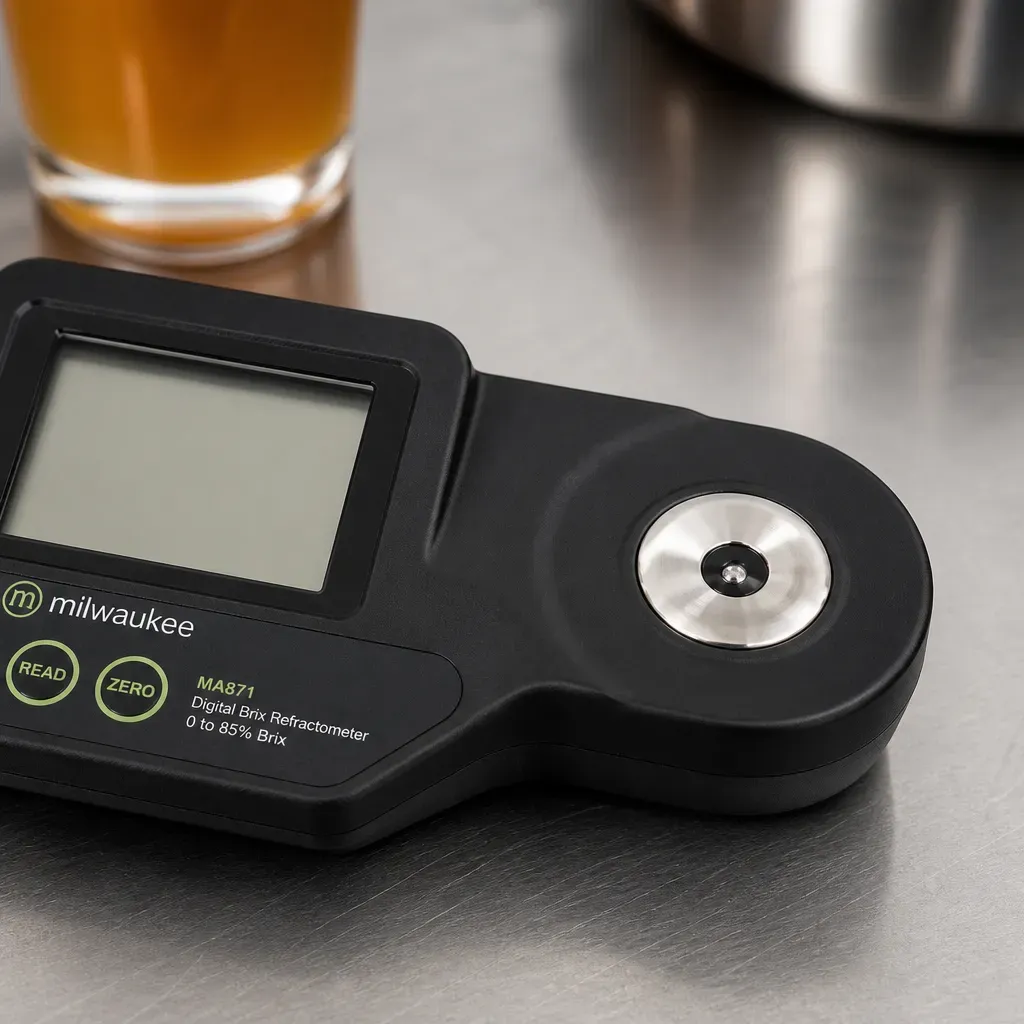
Milwaukee MA871 digital glucose refractometer with automatic temperature, yellow LED, 0 to 85% Brix, +/- 0.2% accuracy,
£189.00 inc. VAT (£157.50 ex. VAT)
- Measures 0-85% Brix for glucose, fructose and invert sugar solutions.
- Automatic temperature compensation keeps readings consistent across changing sample conditions.
- Yellow LED display stays readable in bright production areas and low-light labs.
- +/-0.2% Brix accuracy helps reduce batching errors and product waste.
Why Choose Milwaukee D
Built for Professional Batch Control
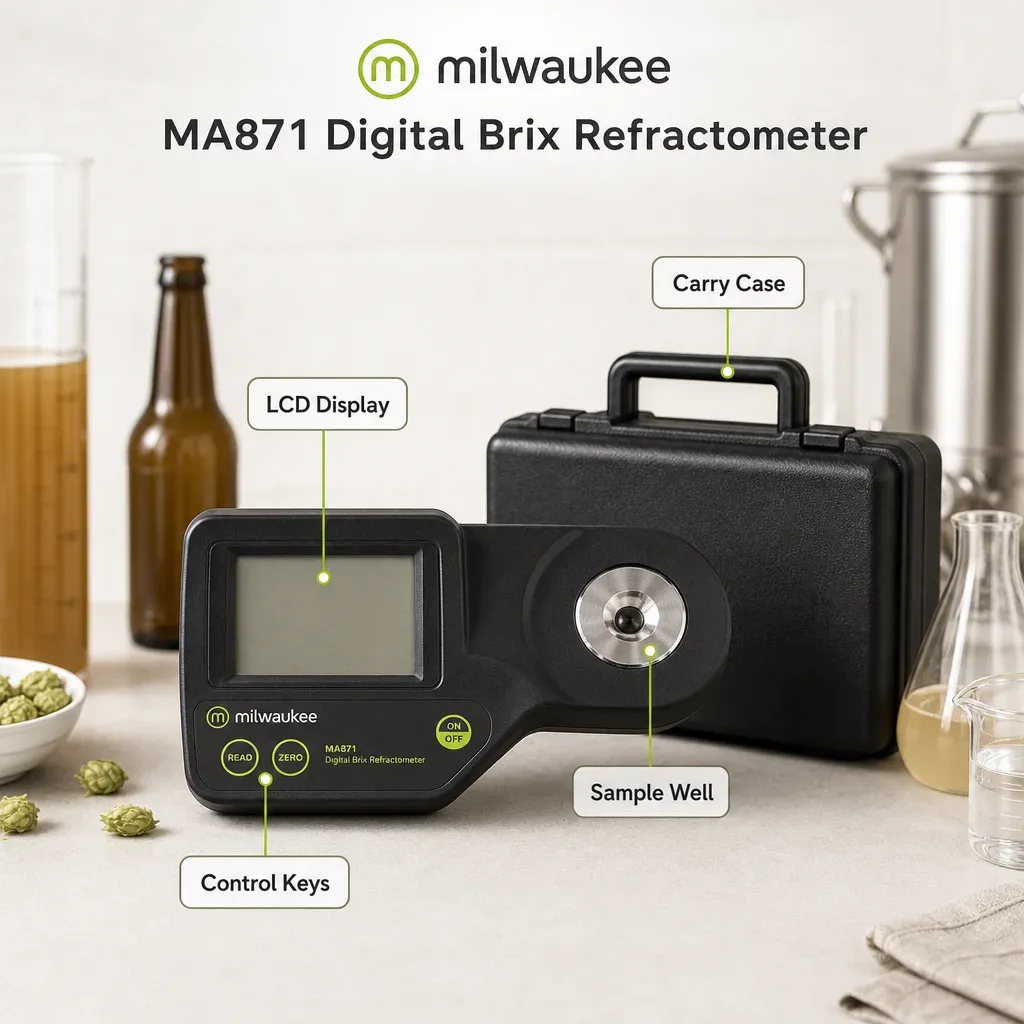
The Milwaukee MA871 is a digital Brix refractometer designed for buyers who need more than a hobby instrument. Whether you are checking wort, fruit juice, soft drinks, preserves or honey, it delivers rapid sugar concentration readings that support tighter process control and more consistent finished product quality.
Why Digital Beats Analogue for Routine Testing
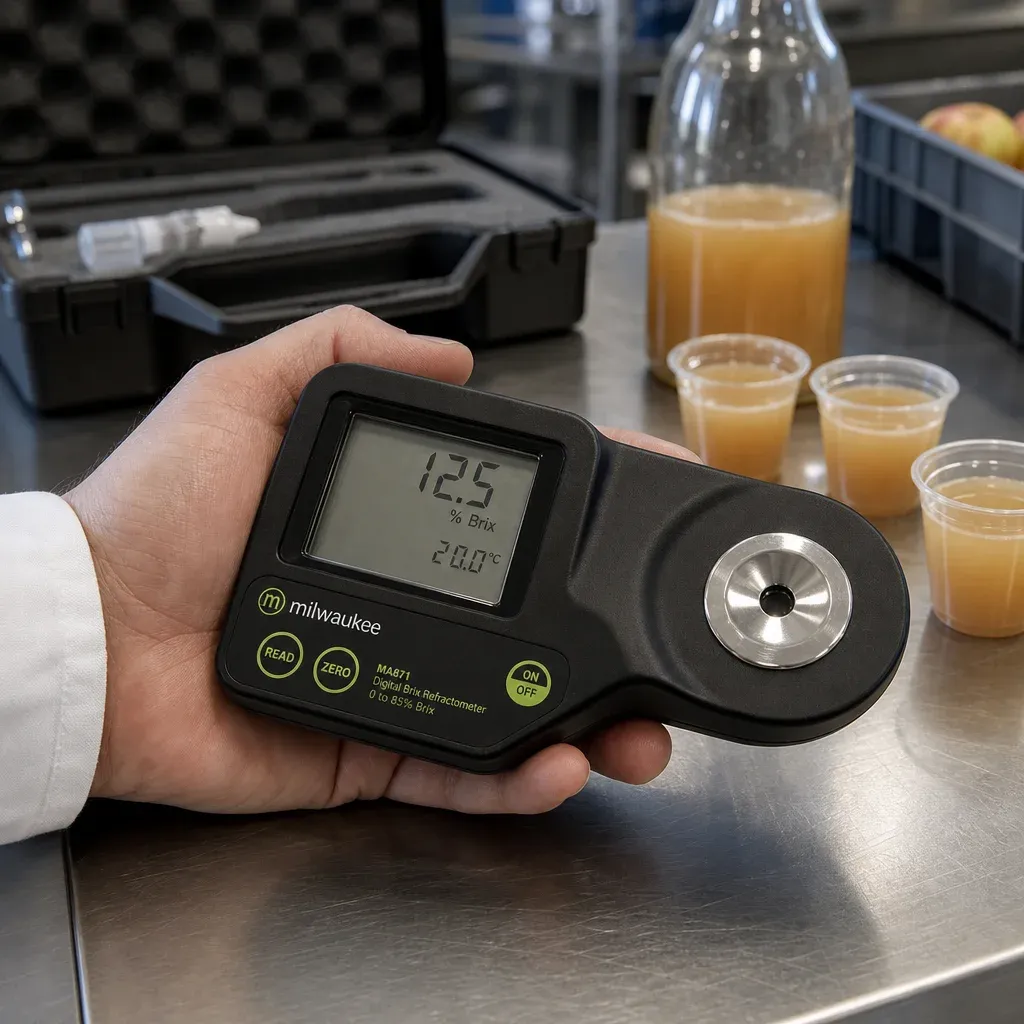
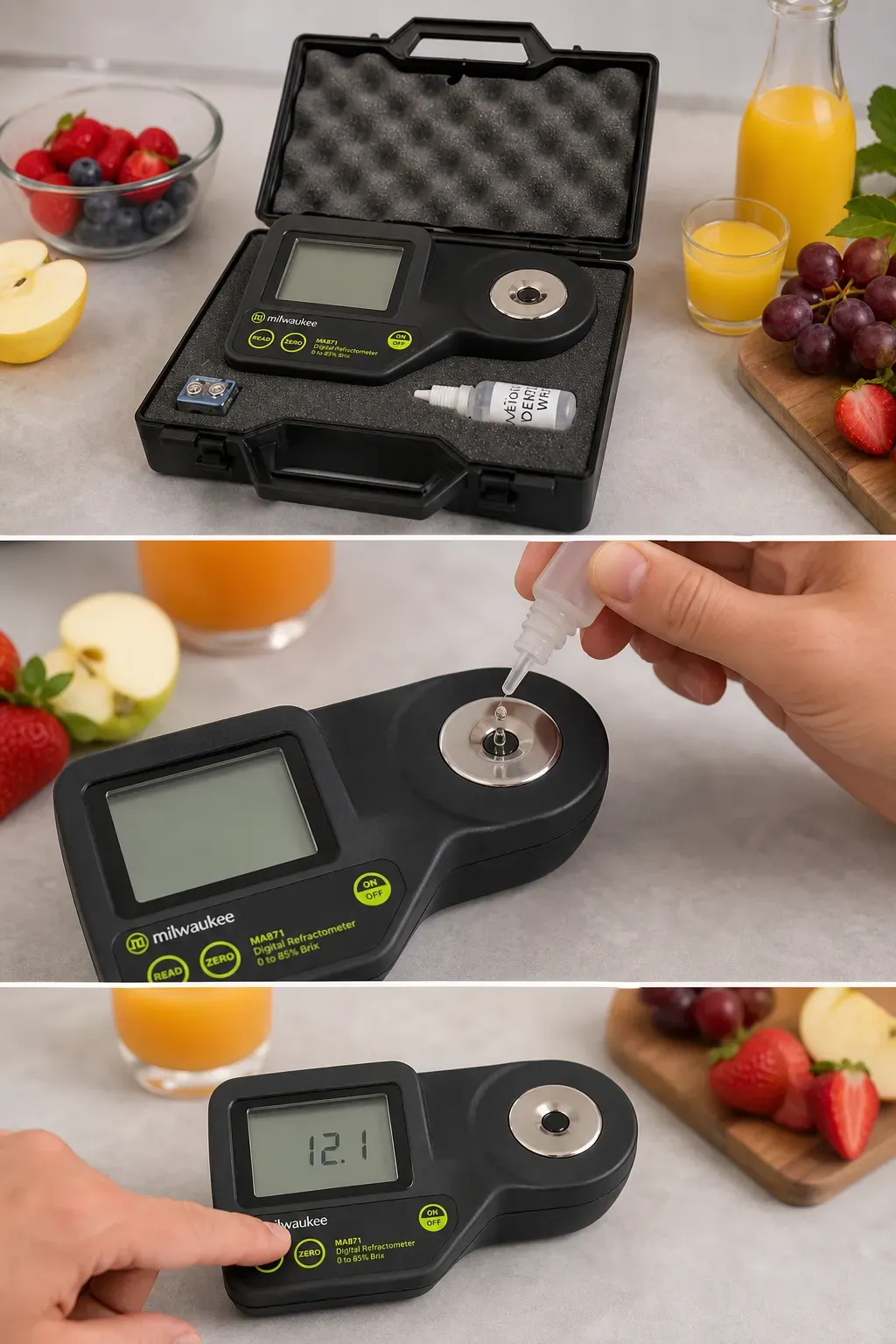
Unlike analogue optical refractometers that rely on visual interpretation, the MA871 provides a clear digital result with 0.1% resolution and +/-0.2% accuracy. That means fewer reading disputes between operators, less eye strain during repeated checks and stronger confidence when recording production or compliance data. For many UK teams, it is a practical upgrade over entry-level optical alternatives and a procurement-friendly option beside brands such as Hanna Instruments and Atago.
Reliable Readings Across Real Working Conditions
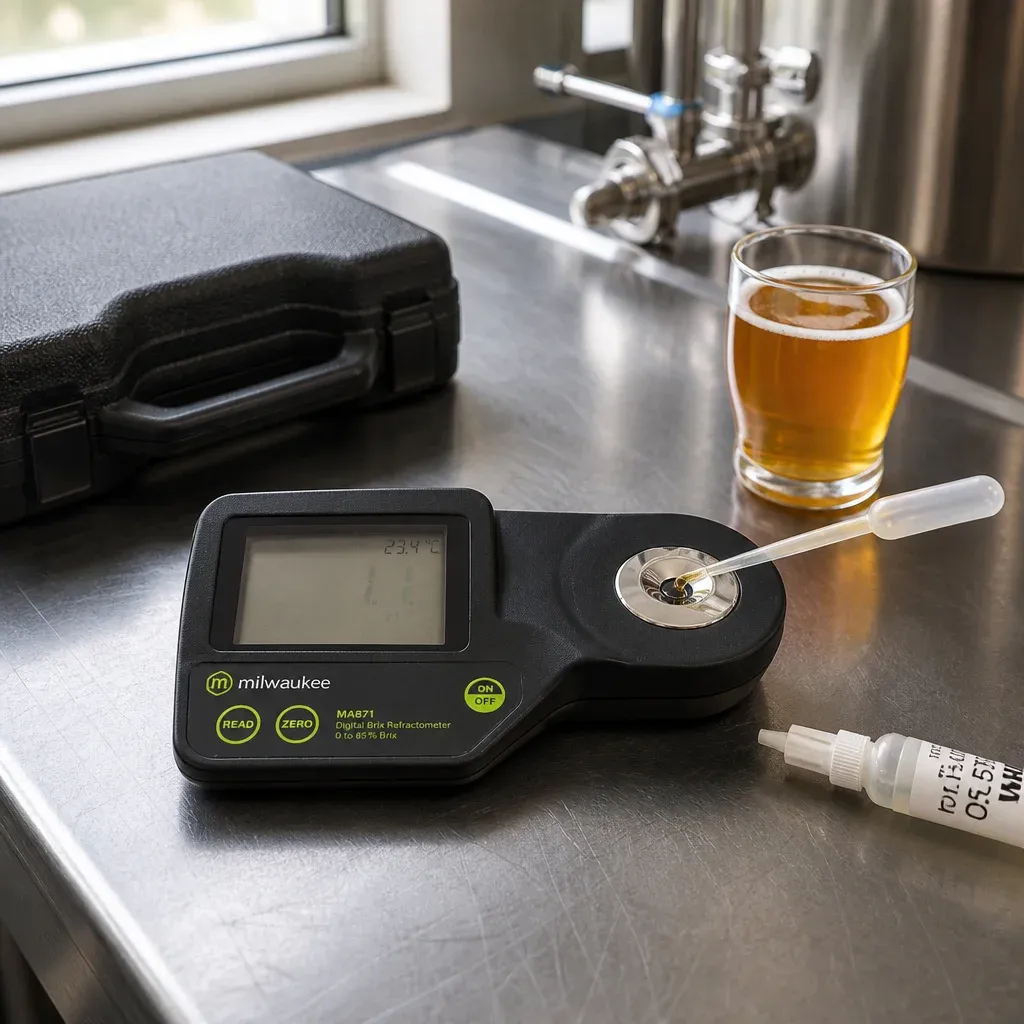
Automatic temperature compensation helps maintain dependable performance when sample temperature varies, reducing the need for manual correction. The sealed prism and stainless steel sample well are simple to clean between tests, making the unit well suited to fast-paced brewing, beverage and food production environments.
Portable, Precise and Ready for Daily Use
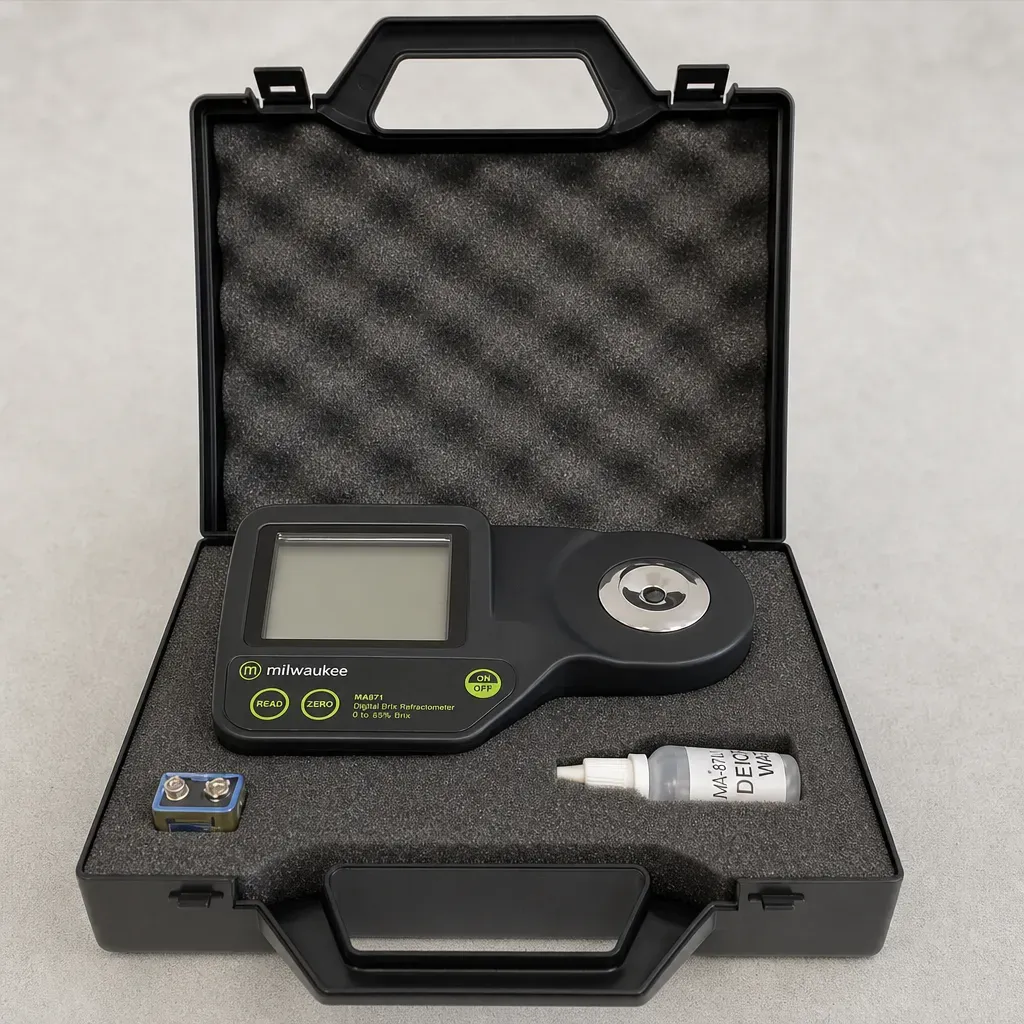
Compact and battery powered, the MA871 fits easily into a production workflow, from incoming ingredient checks to in-process verification and final batch confirmation. If you need a digital brix refractometer professional users can rely on, this portable beverage sugar meter offers the speed, repeatability and usability that premium UK buyers expect.
Technical Specifications
- Measurement Range
- 0 to 85% Brix
- Accuracy
- +/-0.2% Brix
- Resolution
- 0.1% Brix
- Temperature Compensation
- Automatic from 10 to 40°C
- Sample Volume
- 100 uL
- Battery
- 1 x 9V battery
- Dimensions
- 192 x 102 x 67 mm
- Weight
- 420 g
Price Comparison
See how our price compares across UK retailers
| Retailer | Price | Delivery | Warranty |
|---|---|---|---|
| Milwaukee D UK (Specialist)BEST | £189.00 | FREE | 12 months + UK Support |
| eBay (est.) | £236.25 | Varies | Seller dependent |
| High Street RRP | £302.40 | N/A | Varies |
Prices checked 4 August 2026. Prices may vary.
Customer Reviews
We use this for small-batch cordial production and the digital readout is far quicker than our old optical unit. The 0.1% resolution makes it much easier to keep records tidy and spot small recipe shifts.
Ordered for our brewery lab and it arrived promptly from the UK warehouse. The automatic temperature compensation is genuinely useful when samples come in at slightly different temperatures during a busy brew day.
From a quality control perspective, this is a sensible professional tool. The MA871 gives consistent Brix readings on fruit juice samples and removes much of the operator variation we saw with analogue refractometers.
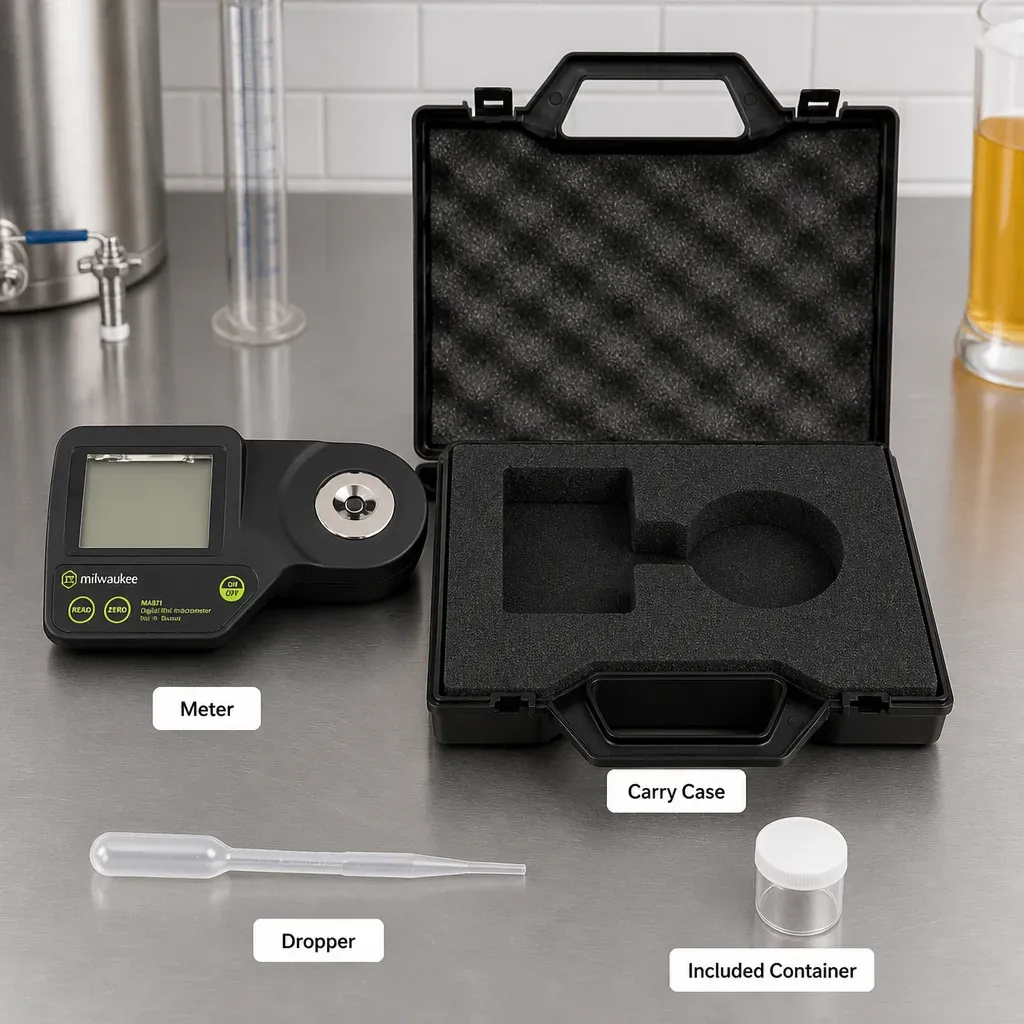
Very accurate and simple to calibrate, and the prism area cleans up well between jam batches. My only minor criticism is that I would have liked a carry case included at this price.
We compared this against an older competitor unit and found the Milwaukee easier for staff to train on. No squinting through an eyepiece, just a clear number on screen and done.
Bought it as a beverage sugar meter for syrup and soft drink checks. It performs well, though you do need to stay disciplined with cleaning the prism if you're testing sticky samples all day.
Excellent value for a premium sugar refractometer uk option. We use it for honey checks and the wide range means we are not working at the edge of the instrument's capability.