
Short answer: To measure soluble solids in jam at 20°C with an MA871, first define a representative, safely handled sample and bring it to the required method temperature. Calibrate the clean instrument with distilled or deionised water, remove the calibration liquid, cover the prism completely with the prepared sample, press READ, record the Brix value and clean the well promptly. Milwaukee states a 100 µL minimum sample, 0.1% Brix resolution and ±0.2% Brix accuracy. The meter does not establish a universal jam endpoint, food safety or legal compliance from one reading.
Prepare the sample and instrument
Keep the handheld instrument away from the hot pan and prepare a small sample using the business's safe method. The MA871 sample-temperature range is 0 to 80°C, but a legal or production method specifying 20°C should be followed at 20°C. Do not use ATC as permission to ignore the required reference condition.
- Prepare a representative jam sample and bring it to 20°C using the approved kitchen method.
- Clean the well and calibrate with distilled or deionised water.
- Remove the calibration water and fully cover the prism with sample.
- Press READ, record Brix and temperature context, then clean and dry the well.
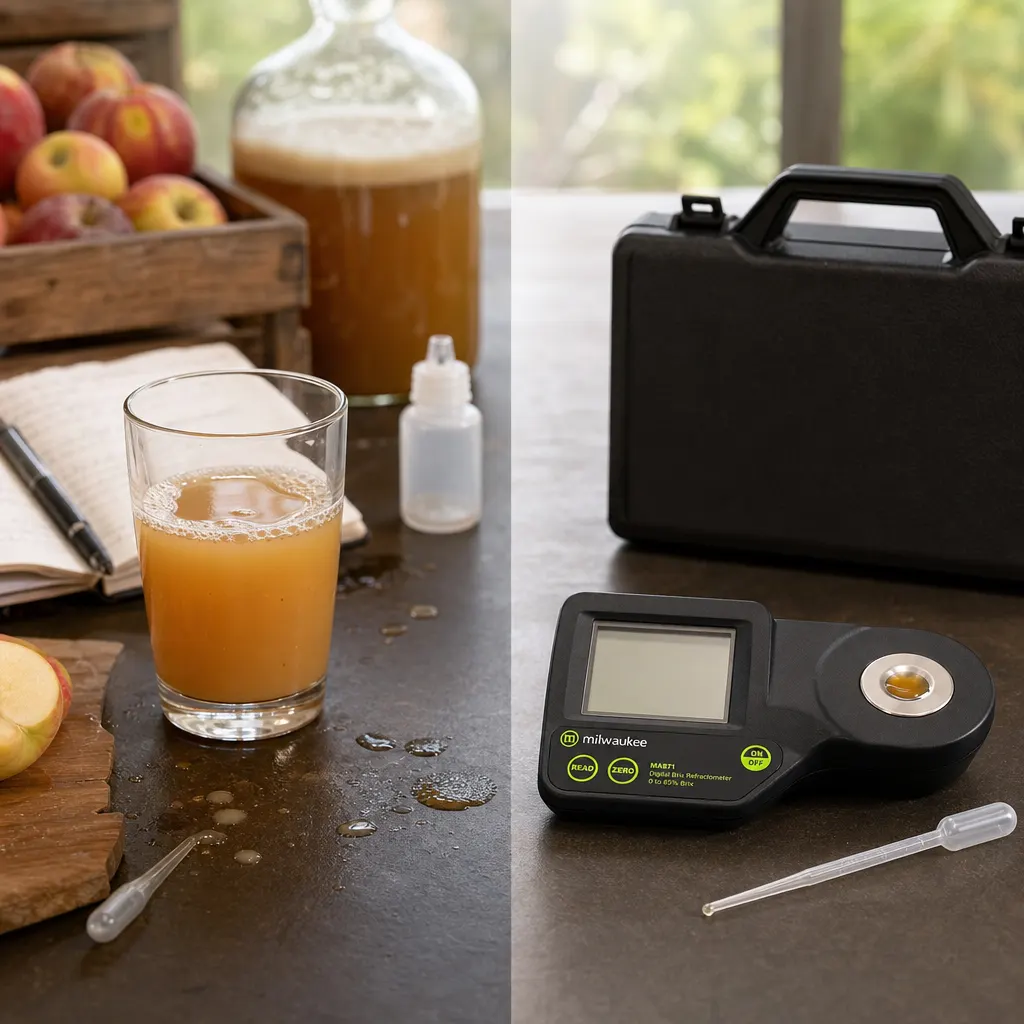
Record what the display means
Milwaukee specifies 0.1% Brix resolution and ±0.2% Brix accuracy. Record the displayed increment without claiming that the true result is exact to 0.1%. Note the batch, recipe, sample point, time and any repeat reading so later comparisons retain context.
| Record field | Purpose |
|---|---|
| Batch and recipe | Links result to the product |
| Sample at 20°C | Documents method condition |
| Displayed Brix | Preserves raw reading |
| Repeat or action | Explains the decision |
Clean without damaging the meter
Milwaukee directs users to rinse the sample well with water and wipe it with soft tissue. The manual warns against immersing the instrument or spraying it with water. Manufacturer does not specify dishwasher, sink-wash or chemical-sanitiser compatibility for the MA871.
Limits of the 20°C reading
A Brix reading does not measure pH, microbial contamination, pectin performance, finished texture or shelf life. Where the result is used for a regulated product, verify the applicable law and approved method. The MA871 manufacturer does not claim that one reading certifies a jam batch.
Related guides and product details
Use a controlled 20°C sample, follow Milwaukee's calibration and cleaning method, and keep the Brix result inside the wider recipe and food-control record. Read Jam Brix Meter for a Small UK Food Business for related guidance. Read Refractometer for Jam Setting Point: UK Buying Limits for related guidance. Review the documented specification on the Milwaukee MA871 Digital Brix Refractometer product page before ordering.
Sources and safety context
- Supports sample, range, resolution, accuracy and temperature specifications. Milwaukee MA871 Digital Brix Refractometer.
- Supports calibration, measurement, cleaning and handling steps. Milwaukee MA871 Instruction Manual.
- Supports the refractometer-at-20°C regulatory context for specified products in England. The Jam and Similar Products (England) Regulations 2003.